Researchers
Find funding, build a reputation and share expertise while managing their projects and intellectual property.
DEIP.World · Design leadership
Designing a platform that connects researchers, investors and funding agencies—from discovering research to evaluating opportunities and managing intellectual property.
Explore the case ↓
01 / The challenge
DEIP was a blockchain-based knowledge platform for scientific funding and collaboration. Its ambition was to help funding agencies, universities and researchers work with greater transparency and accountability.
The design challenge went beyond presenting research. People needed to understand a project’s context, assess its potential and find the right expertise—often across scientific fields they did not know well.
I led the design function and hands-on product design, connecting that ambition with concrete workflows rather than making the underlying technology the starting point of every interaction.
02 / Users & approach
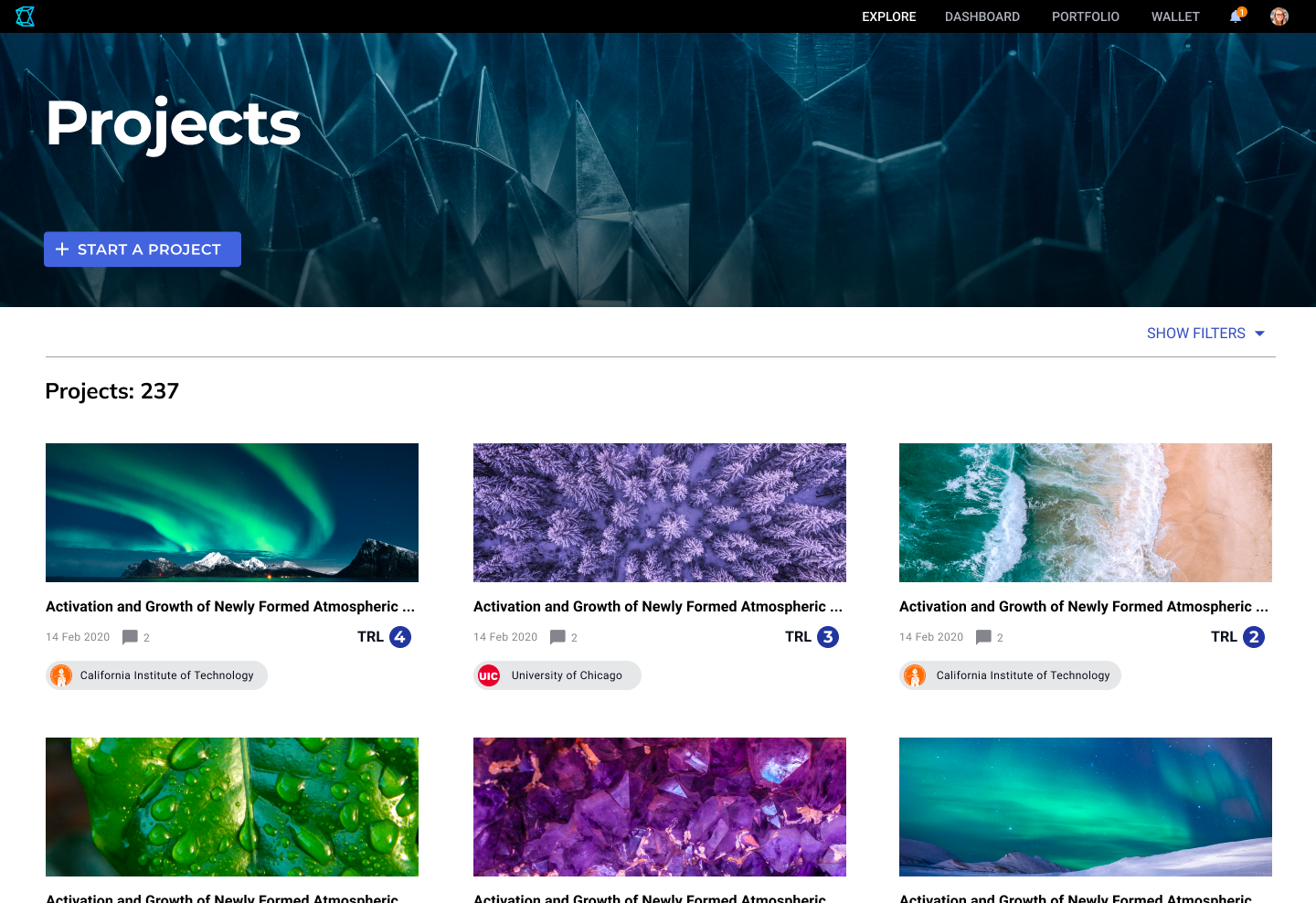
I facilitated research, developed wireframes and prototypes, and delivered high-fidelity designs in direct collaboration with stakeholders, Product and Engineering. Three user groups shaped the product direction.
Find funding, build a reputation and share expertise while managing their projects and intellectual property.
Evaluate opportunities, find relevant expertise and use research data to inform decisions.
Understand where funding goes, avoid duplicated payments and support transparent, accountable processes.
03 / Research workflows
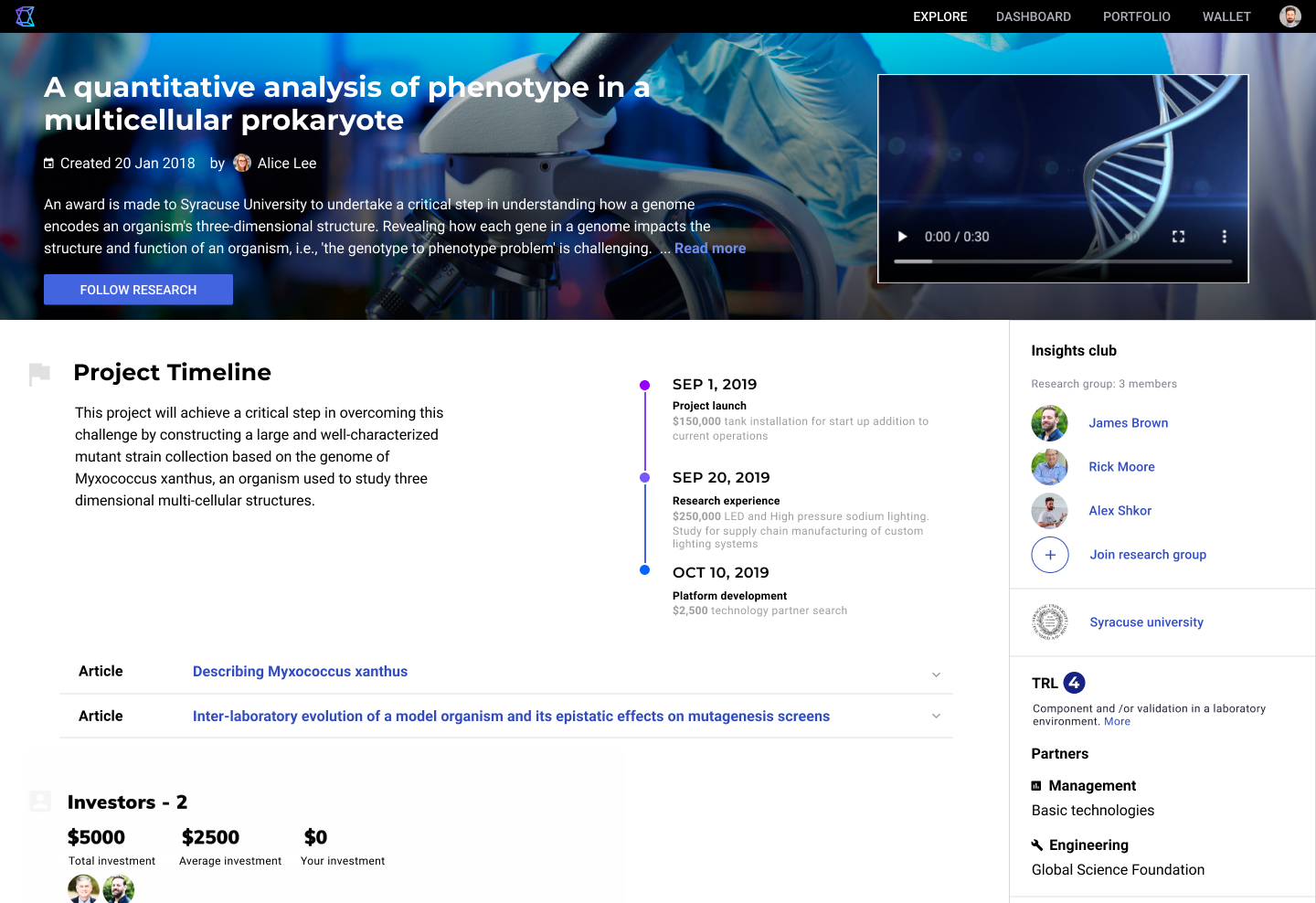
The project page brings the research summary, timeline, publications, people and funding information into one place. It gives visitors a route from an initial overview to the detail behind a project.
Grouping this information creates a clearer hierarchy: understand the research first, then explore its progress, contributors and supporting material.
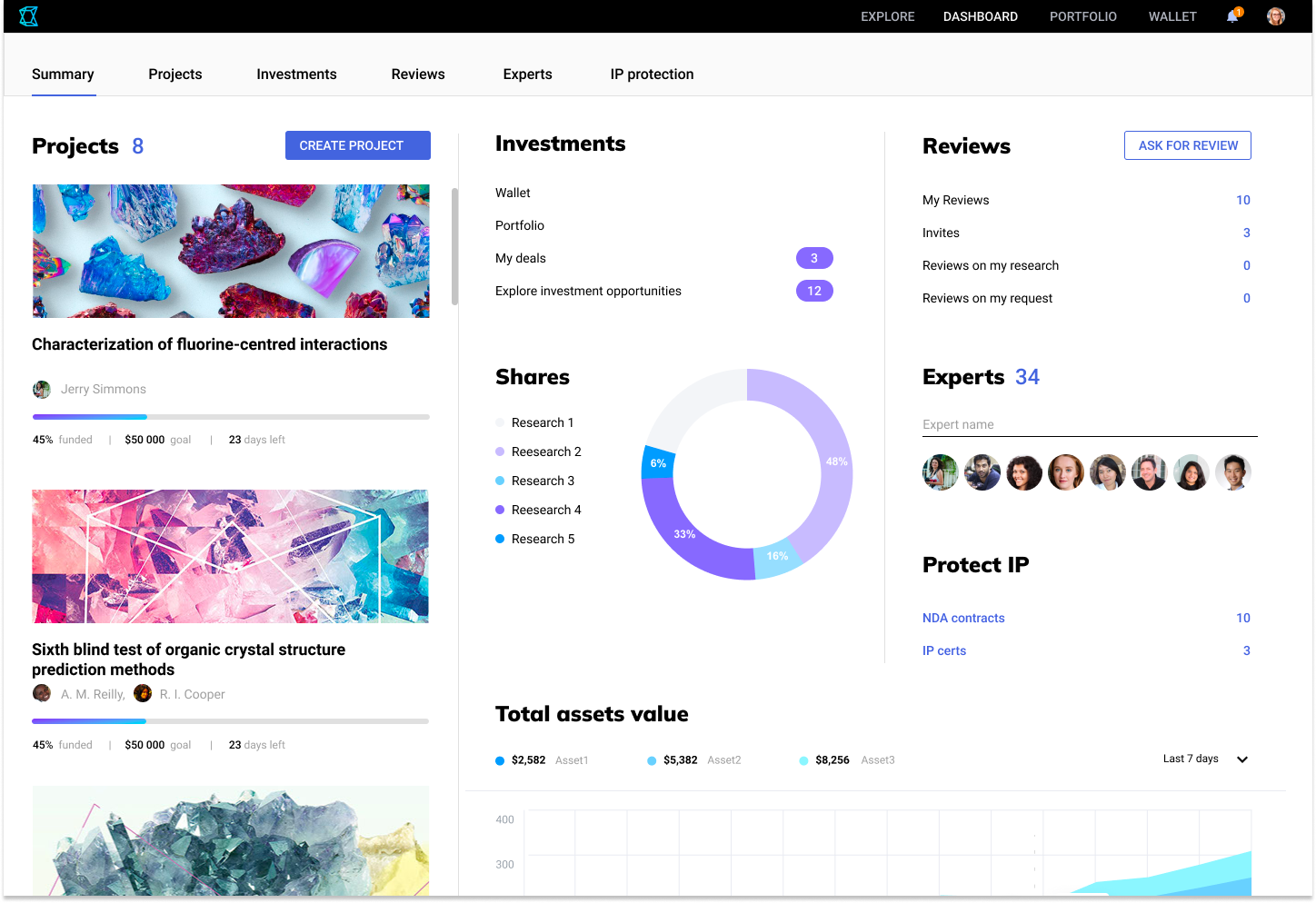
Researcher’s dashboard
The researcher’s dashboard groups projects, investments, reviews and expert connections into a working overview. Direct entry points to project creation, review requests and IP records connect the summary with the next task.
This reflects the central design principle: simplify dense workflows without hiding the information people need to act.
04 / Investor decisions
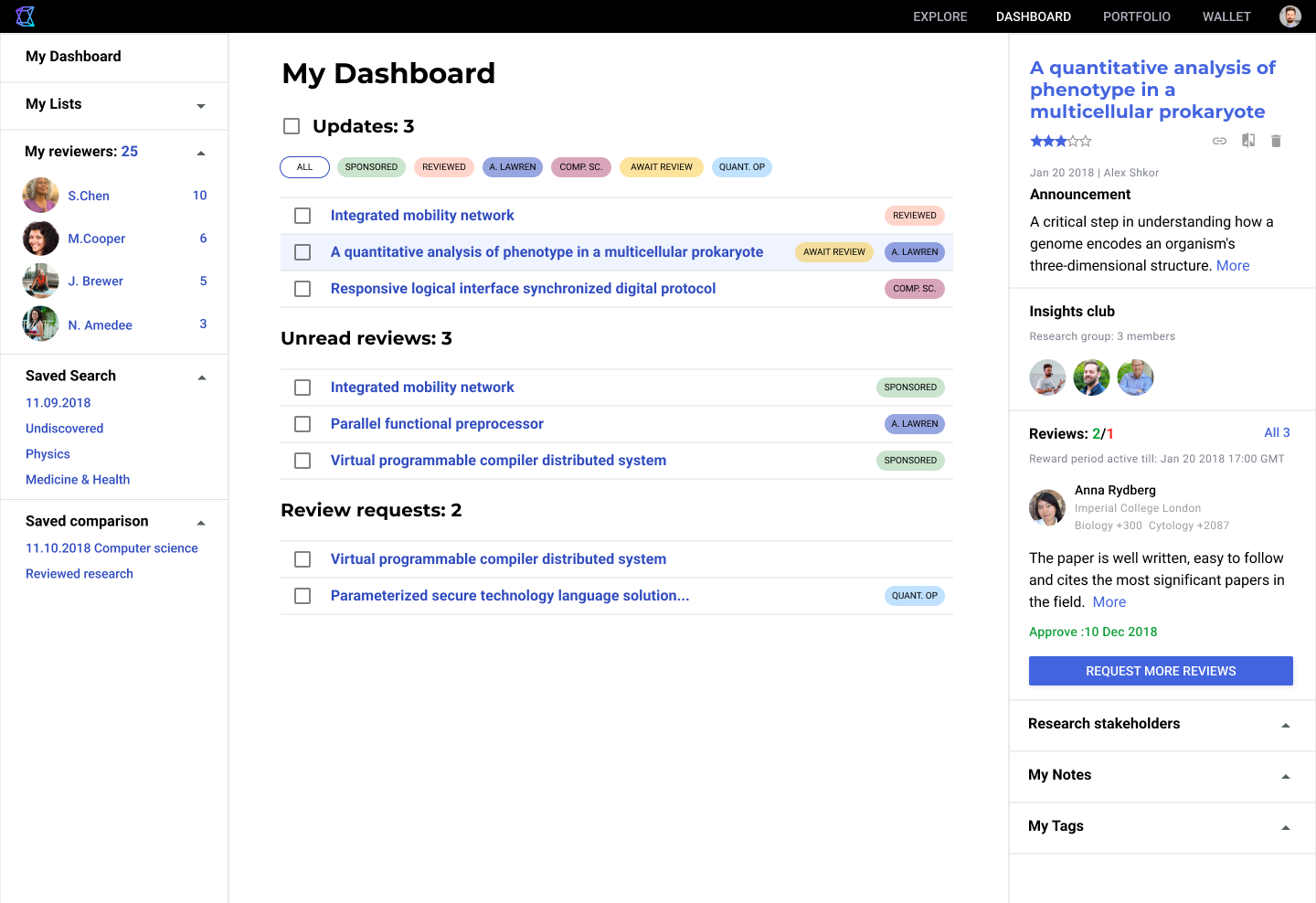
Investors may need to evaluate research outside their own field. The investor workspace brings project updates and reviews together, with access to trusted reviewers and their areas of expertise.
The design supports requesting a review from a selected expert and following the response alongside the relevant research, keeping expert input close to the decision it informs.
Comparing opportunities
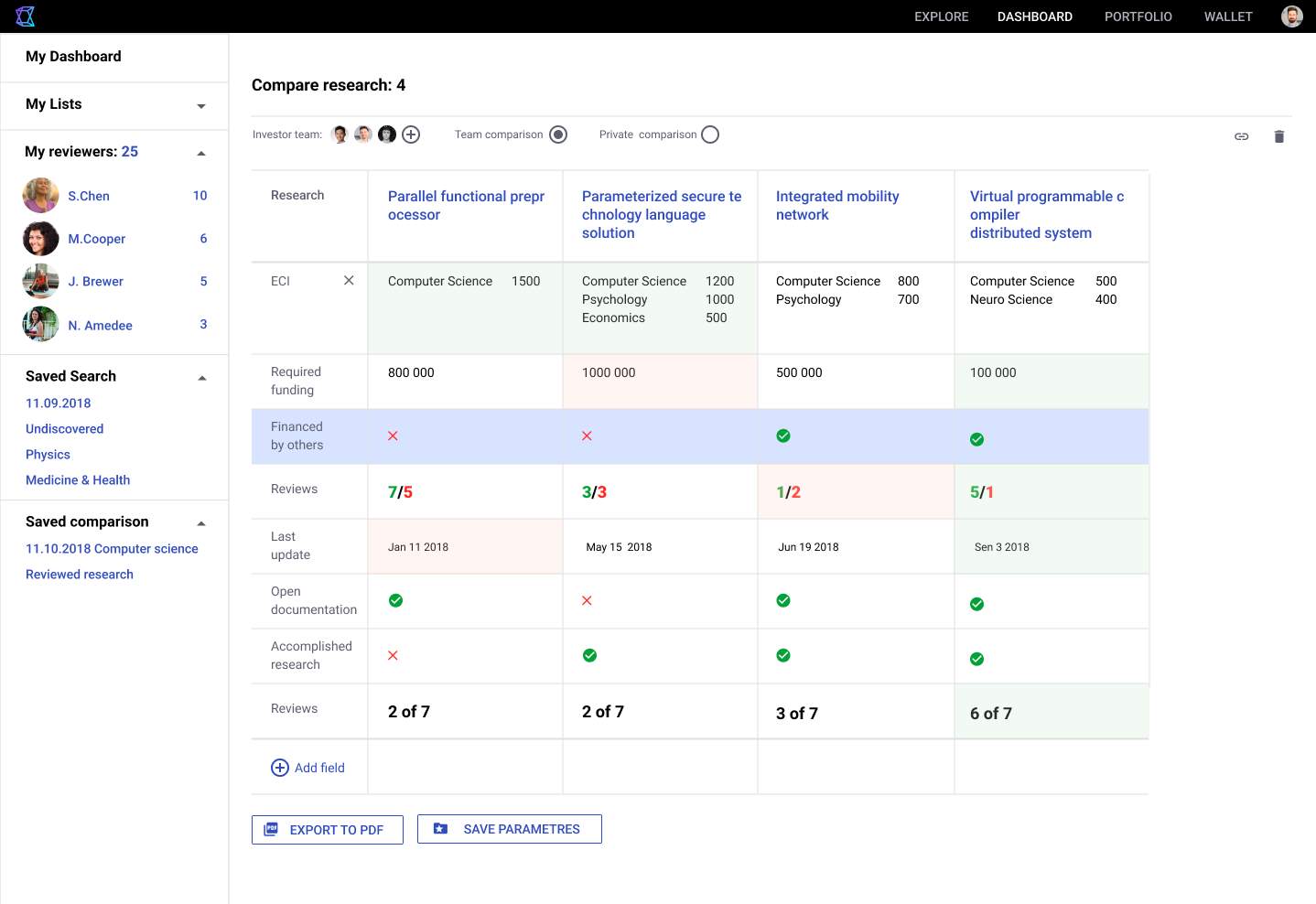
A side-by-side comparison puts funding needs, reviews, documentation and project status into a common structure. Investors can choose comparison fields, save the parameters and export the view.
The aim is to make differences easier to inspect while preserving the context behind each opportunity.
05 / Trust & ownership
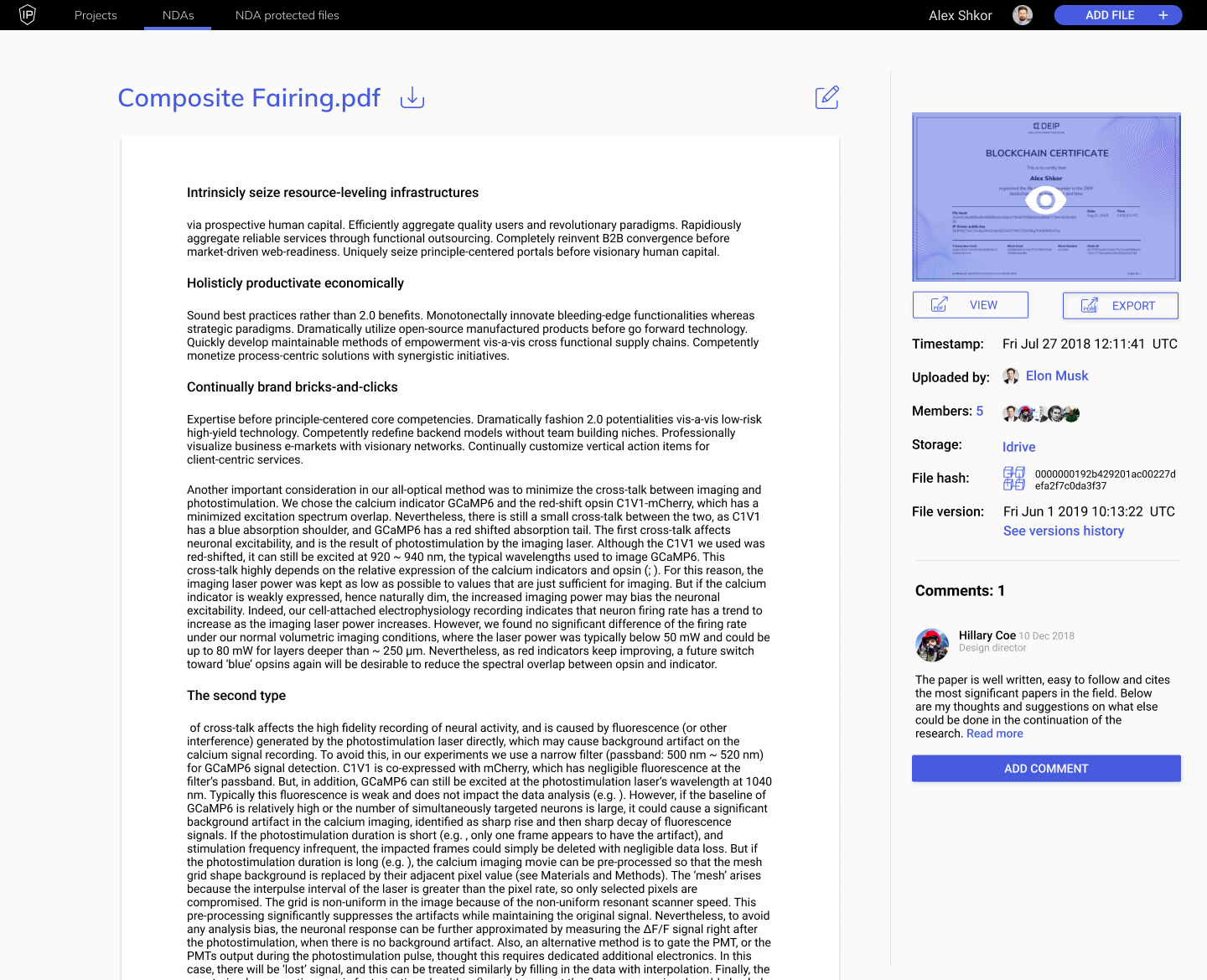
Trust was a design requirement across the platform. Intellectual-property workflows bring documents together with their certificates, timestamps, membership information and version history.
Rather than leave blockchain records as an abstract technical concept, the interface gives them a place beside the material they relate to. Users can inspect and export a certificate or follow a document’s history from the same view.
06 / Design contribution
I established the design vision and built a design system from scratch while owning the end-to-end design process. This gave the B2B and B2C workflows a shared foundation for consistency as the platform expanded.
The work connected research discovery, project management, expert review, comparison and IP workflows around three principles: make complex information clearer, keep decisions focused and make trust visible in the interface.